
Misdiagnosis vs. Delayed Diagnosis: What’s the Difference in a Malpractice Claim?
When you visit a doctor, you place immense trust in their ability to provide an accurate and timely diagnosis. This diagnosis is the foundation of your entire treatment plan. When a diagnostic error occurs, the consequences can be devastating. Two of the most common and serious diagnostic failures are misdiagnosis and delayed diagnosis. While they may sound similar, they have distinct meanings and can shape the strategy of a medical malpractice claim. At the Baltimore personal injury law firm of Murphy, Falcon & Murphy, we help victims of these errors understand their legal rights. Here are five key points explaining the difference and what it means for your case. Schedule a consultation today.

What Is a Misdiagnosis?
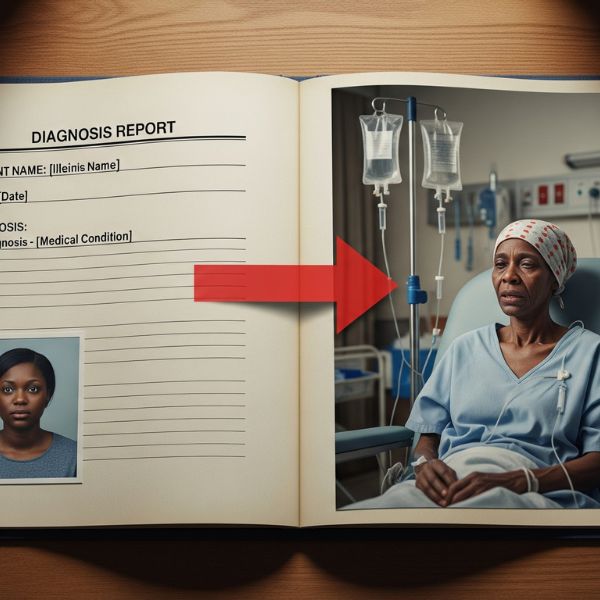
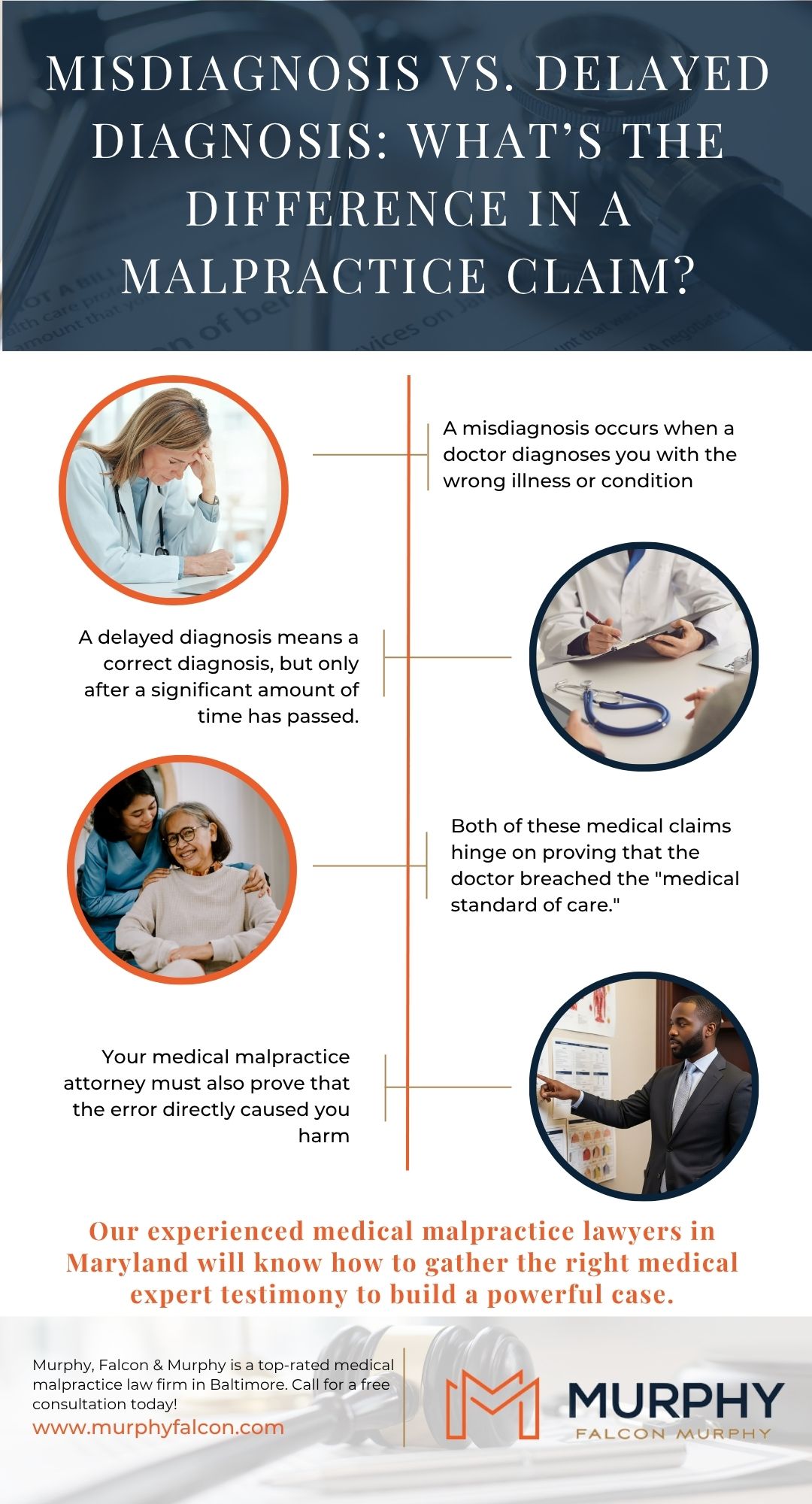
A misdiagnosis occurs when a doctor diagnoses you with the wrong illness or condition, or incorrectly tells you that you have no illness at all. For example, a doctor might diagnose a patient’s chest pains as indigestion when they are actually suffering a heart attack. The harm results from both the lack of proper treatment and, in some cases, receiving incorrect treatments that may cause further injury.

What Is a Delayed Diagnosis?
A delayed diagnosis means that the doctor eventually makes the correct diagnosis, but only after a significant and unreasonable amount of time has passed. For instance, a doctor may dismiss a patient’s symptoms as a minor issue for months before finally diagnosing a progressive disease like cancer. The harm here is the loss of a critical window for early and more effective treatment, which often leads to a worse prognosis.

The “Standard of Care” Is the Legal Benchmark
Both of these medical claims hinge on proving that the doctor breached the “medical standard of care.” This standard is defined as the level of skill and care that a reasonably competent physician in the same specialty would have provided under similar circumstances. A skilled medical lawyer must prove that another qualified doctor would not have made the same diagnostic error.
Proving Causation and Harm
A diagnostic error alone is not enough to win a case. Your medical malpractice attorney must also prove that the error directly caused you harm. For a delayed diagnosis, this means showing that the delay allowed the condition to worsen, requiring more invasive treatment or resulting in a poorer outcome than you would have had with a timely diagnosis.

How an Expert Medical Malpractice Lawyer in Baltimore Can Help
The evidence and legal strategy required can differ between these two types of cases. An experienced medical malpractice lawyer in Maryland will know how to gather the right medical expert testimony to build a powerful case tailored to the specific type of error you suffered. They understand the nuances that can make or break medical claims.
CALL TODAY
If you or a loved one has suffered due to a diagnostic error, you need a powerful advocate. As a leading personal injury law firm, we have a deep understanding of these complex cases. The legal team at Murphy, Falcon & Murphy is here to help you navigate the path to justice. Contact our premier medical malpractice lawyers in Maryland today.