
Fetal Distress: When Hospital Staff Fail to Recognize Critical Warning Signs
The birth of a child is supposed to be one of the most joyous moments of your life. You place your trust and the life of your unborn baby in the hands of medical professionals, expecting them to remain vigilant. However, when hospital staff fail to recognize the critical warning signs of fetal distress, that joy can quickly turn into a lifelong struggle. At Murphy, Falcon & Murphy, our personal injury law firm has seen firsthand how a single oversight in the delivery room can lead to devastating consequences like cerebral palsy or permanent brain damage. Call one of our lawyers today.

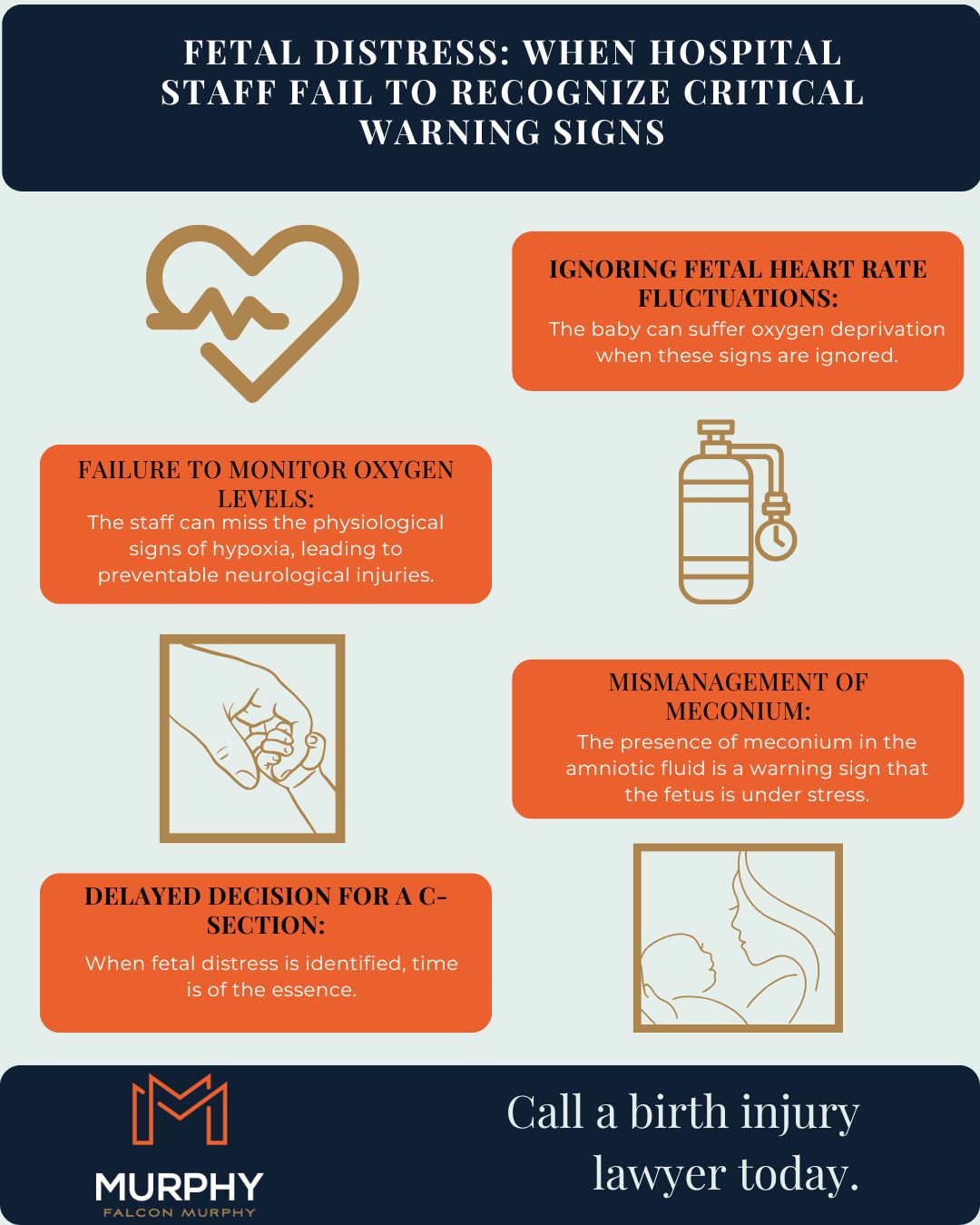
Ignoring Fetal Heart Rate Fluctuations
The most vital tool in a labor ward is the electronic fetal monitor. It provides a real-time window into your baby’s well-being. Staff must be trained to identify “non-reassuring” patterns, such as late decelerations or fetal bradycardia (a dangerously slow heart rate). When these signs are ignored or misinterpreted, the baby may be suffering from oxygen deprivation. If your medical team failed to act on these red flags, one of our medical malpractice lawyers can help you determine if the standard of care was breached.

Failure to Monitor Oxygen Levels
Fetal distress is essentially a cry for help when a baby isn’t getting enough oxygen or nutrients. Beyond heart rate monitoring, medical staff should look for signs of acidosis through scalp pH testing if distress is suspected. When one of our birth injury lawyers reviews a case, we often find that staff missed the physiological signs of hypoxia, leading to preventable neurological injuries.
Mismanagement of Meconium
The presence of meconium—the baby’s first stool—in the amniotic fluid is a significant warning sign that the fetus is under stress. If the medical team fails to monitor the baby closely after discovering meconium or fails to clear the airway immediately upon birth, it can lead to Meconium Aspiration Syndrome. This is a critical window where the expertise of one of our medical malpractice attorneys is needed to hold negligent parties accountable.

Delayed Decision for a C-Section
When fetal distress is identified, time is of the essence. Often, the only way to protect the baby is through an emergency Cesarean section. A common form of negligence is the “watch and wait” approach, where hospital staff delay the surgical intervention despite clear evidence that the baby is in trouble. These minutes of delay can be the difference between a healthy recovery and a permanent disability.

Inadequate Staffing and Communication
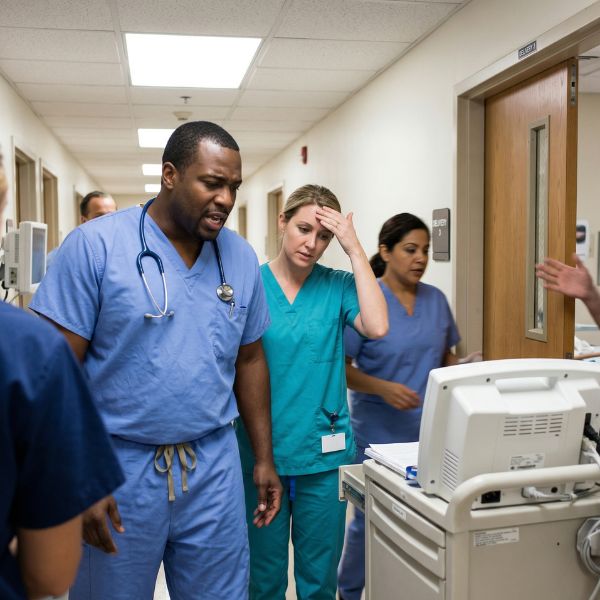
Sometimes the failure isn’t just with one doctor, but with the system. Inadequate staffing levels or a breakdown in communication between nurses and obstetricians can lead to warning signs being missed entirely. If you felt your concerns were ignored or that the delivery room was chaotic and understaffed, you may have grounds for a claim with one of our birth injury lawyers in Baltimore.
Get Started Today
You shouldn’t have to pay the price for a medical professional’s incompetence. If your child suffered an injury because a hospital failed to respond to fetal distress, you deserve answers and justice. At Murphy, Falcon & Murphy in Baltimore, we are dedicated to fighting for families who have been betrayed by the healthcare system. Call a lawyer at our personal injury law firm today for a free consultation to discuss your options with a seasoned birth injury lawyer.