
Road Safety Laws to Know
Our team of auto accident lawyers at Murphy Falcon Murphy always does its best to provide useful information to keep people safe while driving on Maryland roads. While most drivers have done their best effort to understand road safety laws in order to earn their permit or license, it can be easy to forget some of the rules and regulations since there is a vast amount of them. This is why it is important to always take some time to refresh your knowledge of road safety laws, as the last thing you want is to find yourself in trouble for breaking the rules or causing an auto accident.
Every state has the right to pass laws controlling various aspects of road safety, but most tend to follow similar laws found across the entire United States. All traffic signs follow the same principles, but individual states have access to customize traffic signs to a certain extent. In the following blog, we will go over road safety laws that affect the entire country and information about laws that only affect residents in Maryland. Make sure to follow the law to avoid getting into legal trouble and to keep others safe on the road. Visit our website for more tips and information about what we do!

Drivers must use the right side of the road — All states require that drivers travel on the right side of the road. This means that all ongoing traffic will travel on the right side and should NEVER travel on the left side toward oncoming traffic. Intoxicated driving is prohibited — A blood alcohol level of .08 is the maximum amount for drunk driving in almost every state. In addition, with the legalization of marijuana across America, these same laws apply. Nearly every state requires auto insurance coverage — In order to keep drivers protected from huge expenses due to automobile accidents, most states require that all drivers have insurance with adequate coverage. Right of way — Right of way determines which individual has the right to proceed on the road when two cars have come to the same stop. That said, even when you legally have the right away it is important to proceed with caution in case others are not paying attention. Yield to emergency vehicles — If you see an emergency vehicle with its lights on you must immediately get out of the way. If possible, pull over on the side of the road and wait for them to pass. Stop for school buses dropping children off — You must make a complete stop for school buses if you are behind them or when they are on the other side of the road. This is so that children can freely cross the road without the danger of being struck by a vehicle. Right turns at red lights — All states allow drivers to take right turns at a red light. That is unless the intersection has a sign indicating that no turns on red are permitted. 
Common Rules of Driving
Traffic proceeds counterclockwise in a roundabout — As roundabouts become more common across the states, it is important to keep in mind that traffic will travel counterclockwise. Keep right on multi-lane highways —Most states have a rule that makes left-sided lanes the “passing lane.” This means that it should only be used if you are attempting to overtake a vehicle ahead of you that is traveling at low speeds. Speed laws — Most states have unique speed limit laws that must be followed at all times. The highest speed in every state is 85mph, with the maximum in Maryland being 70mph. Mobile phone use — Although we recommend that you never use your cell phone while driving, as it imposes danger to you and others on the road, laws vary from state to state. In Maryland, all drivers are prohibited from using a cell phone without a hands-free device while operating a motor vehicle. License and permits — Most states allow an individual to get their driver’s permit at the age of 15
Common Traffic Laws
Turn on lights in the rain — Maryland requires that all drivers turn on their headlights whenever they are using windshield wipers. Which is why they must be used when it is raining. Seat Belt laws — Maryland law requires that everyone seated in the front seat must have their seat belts fastened. If they are of the age of 15 years or younger, individuals must wear a seatbelt no matter where they are seated in the vehicle. Pedestrian safety — Maryland traffic laws require that all vehicles stop for pedestrians. This also applies to pedestrians riding a bike, as in the state bikes are treated as vehicles. All drivers must yield the right of way to bicyclists so that they can safely travel down the road. Aggressive drivers — Maryland driving law is extremely tough on aggressive drivers, as it can lead to tickets, large fines, point deductions, and much more. Aggressive driving can be categorized as violations of speeding, running red lights and stop signs, tailgating, and unsafe lane changes.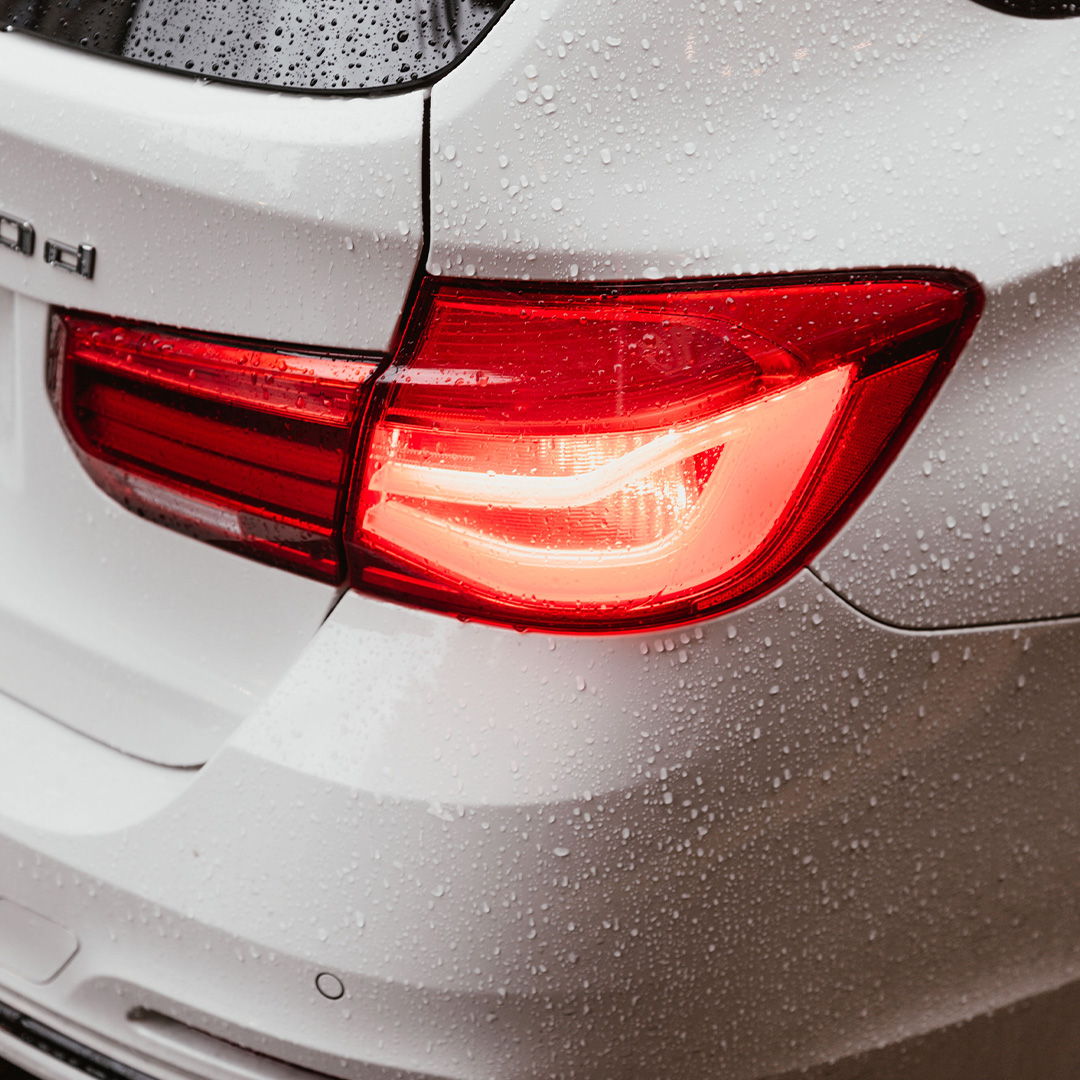
Maryland Specific Traffic Laws
Traffic signs that you see while out on the road are color-coordinated so that drivers can know what to expect ahead Red — One of the most common colors which are only used to indicate a stop, yield, and prohibition sign White Background — This color is used for state regulatory signs such as the speed limit Yellow — Used to indicate warning messages such as for an upcoming railroad crossing Green — Most commonly seen on highways, this color indicates allowed traffic movement or directions Orange — Signs to indicate construction work Fluorescent yellow and green — These signs are used for pedestrian and school crossings Blue —Upcoming service alerts such as a nearby restaurant or rest stop Brown — Used to inform drivers on upcoming cultural, recreational, or tourist attractions
Traffic Sign Color Rules
As leading car accident attorneys in Maryland, the team at Murphy Falcon Murphy is proud to inform residents of the important traffic safety laws that they must follow to avoid accidents and other harm from occurring. Visit us online to learn more or contact us for assistance today!
Contact Us