
Personal Injury Cases In Boat-Related Accidents
Boating is a great pastime, and it’s always fun to get out on the water and enjoy some sunshine and relaxation. But accidents can happen in a wide variety of ways on a boat, and when they do, it’s important to know about your legal rights.
At Murphy Falcon & Murphy, our team of experienced attorneys have been serving Baltimore and the surrounding areas for many years. One of our top services is personal injury, and we can provide you with the legal help that you need if you or someone you love has been injured in a boating accident. Contact our team today to learn more or to receive a free consultation to discuss the details of your boating injury case.
Types of Boating Accidents Or Injuries
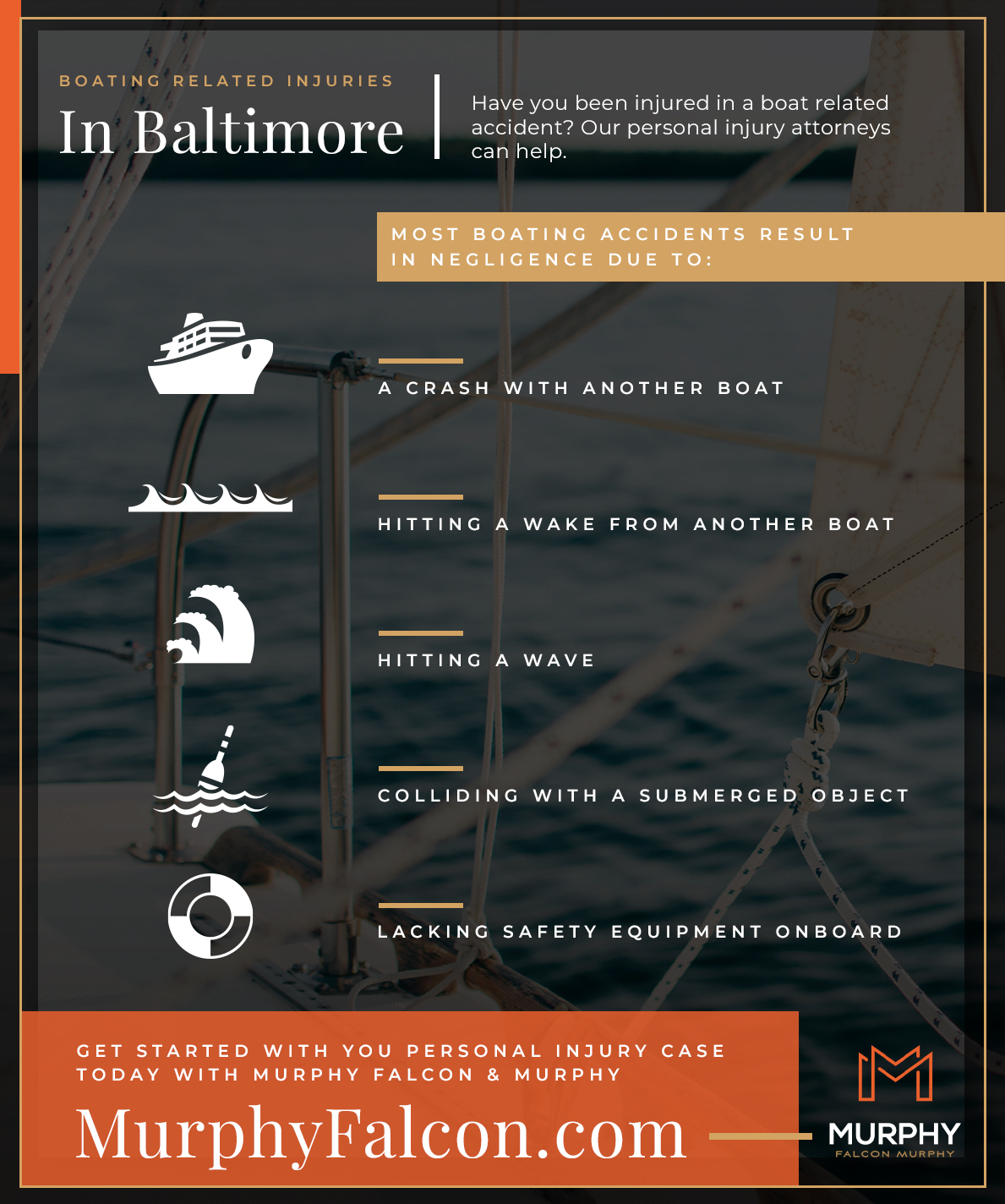
Most boating accidents are the result of negligence. The accidents and the subsequent injuries or damages related to them usually fall into one of five categories:
- Your boat is involved in a crash with another boat
- Your boat hits a wake
- Your boat hits a wave
- Your boat hits a submerged object
- Your boat wasn’t prepared with safety equipment
Your Boat Is Involved In A Crash With Another Boat
In the event of a collision between boats, both operators are usually at least partly at fault. The fault of the crash varies in each case, but if passengers are injured, they are likely to have a legal case against the operators of both boats. In safe boating practices, it is also standard for motorized boats to steer clear of sailboats, and in the event of a collision, the motorboat will likely be the one at fault.
Your Boat Hits A Wake
When you’re out on a boat on a nice day, you’ll likely see other traffic on the water as others enjoy the pleasant rays of the sun. However, each boat is making wakes which can cause damages or injuries if another boat hits the wake in the wrong way. The boat operator must always be on the lookout for incoming wakes, and the operator’s liability will vary depending on state and federal regulations. Some of the factors that go into finding liability include:
- Wake size
- Boat speed
- Visibility of the wake
- Boat traffic in the area
- Whether the operator warned passengers of the incoming wake
- If the injury occured on a sailboat or motorboat
If you were injured by a wake created in a “no wake zone,” such as a marina or inner harbor, then the boat’s operator that created the wake could be found negligent, rather than your boat’s operator.
Your Boat Hits A Wave
This case is extremely similar to your boat hitting a wake. However, there cannot be another boat or driver held responsible since the waves were not created by another boat. To prove negligence, the same rules of size, speed, visibility, etc. will normally be the standard. If your operator wasn’t careful and failed to warn the passengers of incoming waves, they could be held accountable for injuries or damages.
Your Boat Hits A Submerged Object
No matter the conditions, there is always the possibility of a boat hitting submerged rocks, land, or other objects. The negligence for this situation will depend on the caution of the operator. If they collide with a fixed, submerged object while going slowly and consulting GPS or nautical charts, they will likely not be found negligent. However, if they are going too fast with low visibility or no use of charts, they will likely be found negligent.
Your Boat Wasn’t Prepared With Safety Equipment
Every boat is required to have some kind of safety equipment on board, including items like:
- Life jackets for every passenger
- Throwable life rings
- Navigational lights
- Flares
- Loud whistles
- Fire extinguishers
Even though lack of safety equipment isn’t going to be the cause of an accident, it can lead to further complications, injuries, damages, and can deter some of the rescue efforts.
Contact Murphy Falcon & Murphy Today For Help
When you or someone you loved has been injured due to negligence in a boating accident, you can count on the personal injury attorneys at Murphy Falcon & Murphy to have your back. Contact our Baltimore lawyers today to discuss your case.