
Coping With Survivor’s Guilt: Strategies for Healing
Coping with survivor’s guilt can be an overwhelming and complex emotional experience for those who have outlived a traumatic event or loss. At Murphy, Falcon & Murphy in Baltimore, we understand the challenges associated with survivor’s guilt and offer strategies to aid in healing. As seasoned personal injury lawyers, accident attorneys, and trial lawyers, we recognize the importance of addressing survivor’s guilt with compassion and understanding. Here are six key points to consider when navigating survivor’s guilt. Schedule a consultation today.

Acknowledge and Accept Your Emotions
Recognizing and coming to terms with the range of emotions associated with survivor’s guilt is a crucial initial step in the healing process. It’s common to experience a complex blend of conflicting feelings such as guilt, sadness, anger, and uncertainty. Acknowledging and accepting these emotions is essential for embarking on a path toward emotional well-being and recovery. By allowing yourself to fully acknowledge and embrace your feelings without judgment, you can begin the journey of processing and navigating through them in a constructive and healthy manner, paving the way for healing and personal growth.

Seek Support Systems
Seeking out a robust support system is paramount in coping with survivor’s guilt. Whether it be confiding in friends, family, or seeking guidance from mental health professionals, having a supportive network can provide invaluable insights and emotional solace during challenging times. Engaging in candid discussions about your emotions with a trusted individual can offer new perspectives and alleviate the burden of guilt. Our compassionate team of personal injury lawyers in Baltimore stands ready to offer unwavering support and connect you with additional resources to aid you on the path towards healing and self-restoration.

Practice Self-Compassion
Show yourself kindness during this challenging time. Engage in self-care practices that promote relaxation and wellness, such as mindfulness, meditation, physical activity, or pursuing hobbies that bring you joy. Participating in activities that nurture your mental and emotional well-being can aid in managing feelings of guilt and encourage healing.

Stay Present
Survivor’s guilt often arises from reflecting on the past and contemplating the “what if” scenarios. To manage these thoughts, focus on staying present in the current moment and practice mindfulness. By grounding yourself in the present, you can foster a sense of acceptance and decrease feelings of guilt and regret.

Utilize Therapy
Seeking guidance from a therapist or counselor can provide valuable support in processing survivor’s guilt and developing coping mechanisms. Therapy offers a safe environment to explore your emotions, gain insight into your thoughts and behaviors, and learn effective strategies to manage feelings of guilt and self-blame.

Channel Guilt into Positive Action
Transform feelings of survivor’s guilt into constructive action by contributing to the healing of others. Consider volunteering, mentoring, or supporting a cause close to your heart. By assisting others and giving back to your community, you can redirect feelings of guilt into a force for good and make a positive impact on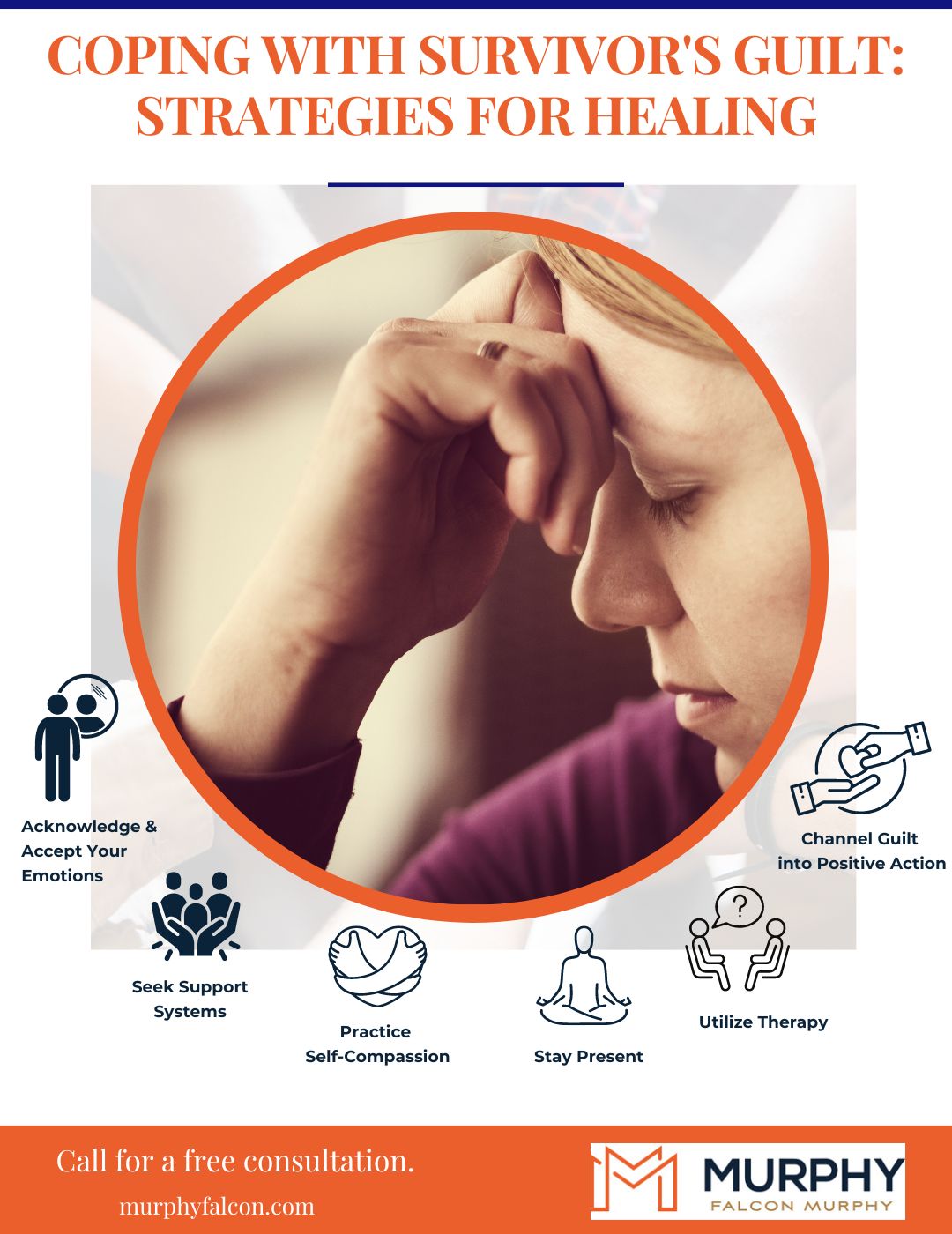 the lives of those around you.
SCHEDULE A CONSULTATION
At Murphy, Falcon & Murphy, our dedicated team of personal injury lawyers, accident attorneys, and trial lawyers are well-versed in the complexity of survivor’s guilt and are committed to providing support on your path to healing. If you or a loved one is grappling with survivor’s guilt following a traumatic event, know that assistance is available. Our compassionate team is here to offer guidance, resources, and legal assistance as you navigate the healing process. Healing is a journey, and with the right support and strategies in place, you can gradually find peace and move forward towards a brighter future. Schedule a consultation today.